The Theory of the Incompatibility of Public Choices
DOI:
https://doi.org/10.66860/mstic.v.i.74Keywords:
incompatibility, public choices, trade-offs, fragility, governanceAbstract
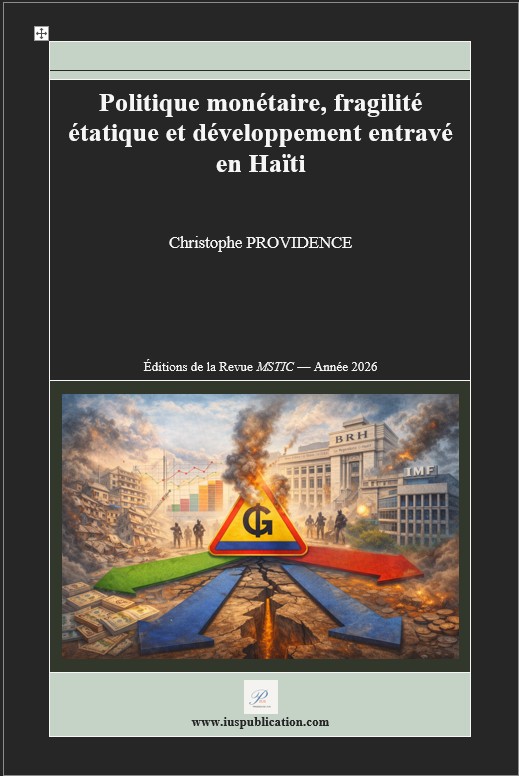
This chapter presents the theory of the incompatibility of public choices as the central interpretive framework for Haitian monetary policy. The theory argues that, in fragile states, public decisions often involve objectives that are simultaneously legitimate but difficult to reconcile. In Haiti, monetary stability, public financing, and economic recovery form a triangle of impossible trade-offs. Stabilizing the currency may reduce fiscal space and contract credit; financing the state may generate inflationary pressures; supporting activity may increase import demand and exchange-rate tensions. The chapter shows how this theory can be methodologically integrated into the empirical analysis of monetary-policy notes, institutional reports, and macroeconomic indicators. It moves beyond a purely technical reading of the BRH and reveals the political, institutional, and social dimensions of its policy trade-offs.
References